Miami-Dade County presents an ideal breeding climate for Blattella germanica, where high ambient humidity and heat accelerate the reproductive cycle down to roughly 30 days per generation. In historic wood-frame…
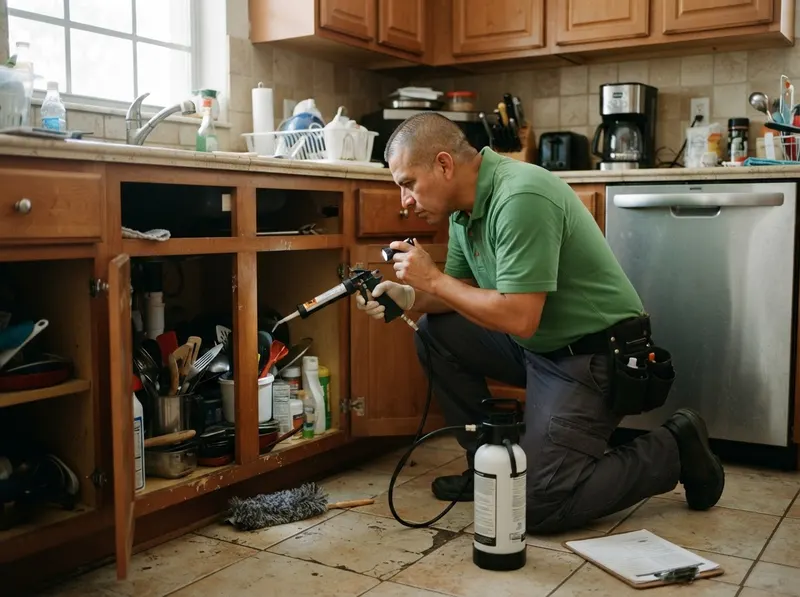
Miami-Dade County presents an ideal breeding climate for Blattella germanica, where high ambient humidity and heat accelerate the reproductive cycle down to roughly 30 days per generation. In historic wood-frame bungalows across Coconut Grove and Little Havana, or high-density concrete developments along Brickell and Edgewater, German roaches harbor directly inside warm motor housings, electrical junction boxes, and unsealed drywall chases. Surface spraying with pyrethroids fails against this species; synthetic liquid sprays trigger reproductive scatter, causing gravid females to disperse into bedrooms and adjacent walls. CedarShield Exterminators deploys targeted mechanical and botanical extractions that neutralize populations at the nest without soaking food-prep zones in airborne toxins.
Technicians follow precise containment sequences compliant with standards from the U.S. Environmental Protection Agency. The program begins with targeted HEPA-filtered vacuuming to eliminate live adults, egg capsules (oothecae), and allergen-shedding frass from counter undersides and drawer tracks. Next, we inject precise, botanical aerosol flushes formulated with natural pyrethrins derived from chrysanthemum blossoms into deep structural gaps. These compounds draw out harborages from behind backsplashes and cabinet trim without leaving synthetic chemical residues on food prep counters, aligning with Centers for Disease Control and Prevention National Center for Environmental Health indoor quality recommendations.
Long-term control depends on breaking the maturation cycle according to University of Florida Entomology protocols. Technicians place non-repellent micro-bead baits containing insect growth regulators (IGRs) within cabinet hinges, sub-counter corners, and motor wells. These juvenile hormone mimics prevent nymphs from molting into breeding adults. Because residential units near Biscayne Bay and dense complexes along Coral Way often share plumbing stacks, localized baiting creates horizontal transfer: foraging nymphs ingest bait and carry active ingredients back to hidden structural pockets, eliminating secondary harborages. Structural plumbing penetrations are then sealed using copper mesh and silicone, following guidelines set by the U.S. Department of Housing and Urban Development Office of Lead Hazard Control and Healthy Homes.
Property owners in Wynwood, Allapattah, and the Upper Eastside avoid the health liabilities of airborne organophosphates through this method. For properties managed under municipal hygiene requirements, our documentation aligns with the sanitation principles governed by the Florida Department of Agriculture and Consumer Services. Furthermore, technicians cross-reference material choices against thresholds established by the Occupational Safety and Health Administration to protect vulnerable pets and home residents. Commercial and multifamily facilities in Overtown and Liberty City also leverage this focused program to satisfy vector containment standards set forth by the Florida Department of Health, while consulting National Pest Management Association technical standards and integrated pest management structural frameworks to guarantee continuous exclusion.
Every job gets a firm, written price after a free on-site visit.
For standards, safe disposal, and service guidance on pest control services in Miami, FL, useful references include U.S. EPA, ENERGY STAR, U.S. Dept. of Energy, Consumer.gov, U.S. Census Bureau, and Google Maps. General consumer and small-business resources are available from USA.gov, Better Business Bureau, FTC Consumer Advice, U.S. Small Business Administration, and Ready.gov.
Tell us about your german cockroach cleanout program job in Miami and we'll send a clear, written quote, usually the same day.
 CedarShield Exterminators