Miami-Dade County features subtropical conditions with an average annual relative humidity exceeding 75%, creating an ongoing breeding environment for urban mosquito vectors. The primary targets of modern exterior…
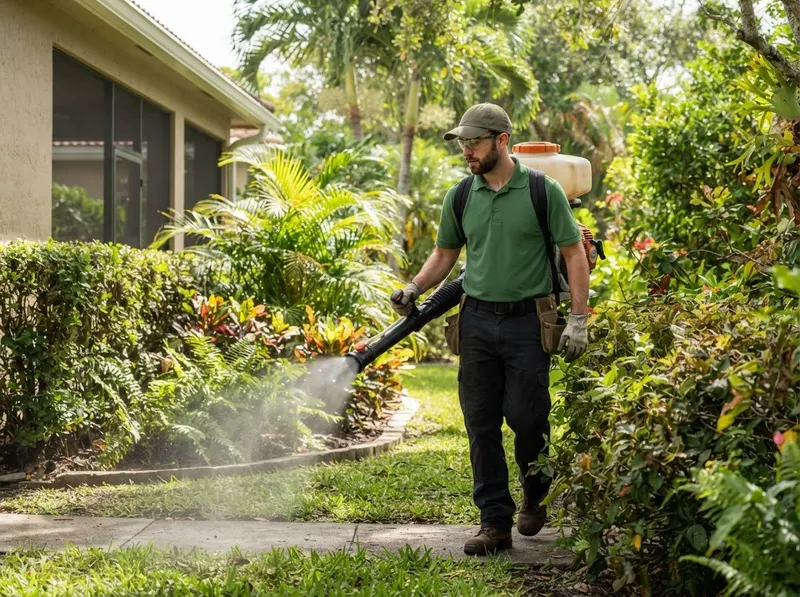
Miami-Dade County features subtropical conditions with an average annual relative humidity exceeding 75%, creating an ongoing breeding environment for urban mosquito vectors. The primary targets of modern exterior treatment are the yellow fever mosquito (Aedes aegypti) and the southern house mosquito (Culex quinquefasciatus). These species reproduce in containers holding as little as one tablespoon of water, colonizing catch basins, native bromeliad leaf axils, and shaded foliage in neighborhoods like Coconut Grove and Coral Way. Standard broadcast spraying often causes non-target drift into sensitive canal systems and coastal waterways. CedarShield Exterminators implements a guardian-focused protocol utilizing targeted micro-droplet foliage misting combined with natural cedar-oil fractions and biological controls to protect human outdoor spaces while shielding domestic pets and garden plants.
Effective exterior suppression requires a structured multi-phase defense rather than temporary adulticide fogs. In areas with dense tree canopies such as the Upper Eastside and Brickell, adult mosquitoes rest beneath the lower leaves of broadleaf shrubs, sea grapes, and palms to escape midday heat. Treatment begins with an audit of physical runoff points and exterior drainage. The application incorporates natural biological agents such as Bacillus thuringiensis israelensis (Bti) into non-potable standing water, targeting larvae within 24 hours of ingestion without disrupting beneficial aquatic life, adhering to principles established by the State of Florida and urban runoff guidelines from the South Florida Water Management District.
Urban properties in Little Havana, Wynwood, and Allapattah frequently border dense alleys or commercial spaces where water collects off-site. For these environments, residual perimeter barriers are bound to exterior resting zones using fine droplets between 50 and 100 microns. This technique avoids the drift hazards regulated under the Florida Department of Agriculture and Consumer Services. Technical guidance from the American Mosquito Control Association confirms that targeting the underside of leaves limits sunlight degradation, allowing botanical barrier agents to sustain active control across regular 21-to-30-day rain cycles. Complementary guidance from the U.S. Fish and Wildlife Service and the University of Florida IFAS Extension highlights that localized yard defense prevents the off-target contamination of urban pollinators when compared to blanket aerial applications.
Properties situated near the urban centers of Edgewater, Overtown, and Liberty City face vector pressures driven by street-level heat islands and subterranean utility vaults. Addressing these risks requires systematic water mitigation alongside the installation of stationary biological ovitraps that intercept breeding females. When dense native landscaping borders high-traffic family zones, structural barriers around patios and foundation perimeters create an exclusion zone that lowers overall bite pressure by up to 90% without requiring indoor evacuation. Exact implementation varies by vegetative density and proximity to open water, and technicians confirm all operational scopes during the primary physical walk-through.
Every job gets a firm, written price after a free on-site visit.
For standards, safe disposal, and service guidance on pest control services in Miami, FL, useful references include U.S. EPA, ENERGY STAR, U.S. Dept. of Energy, Consumer.gov, U.S. Census Bureau, and Google Maps. General consumer and small-business resources are available from USA.gov, Better Business Bureau, FTC Consumer Advice, U.S. Small Business Administration, and Ready.gov.
Tell us about your mosquito reduction and yard defense job in Miami and we'll send a clear, written quote, usually the same day.
 CedarShield Exterminators